How to Organize Your SR&ED Documentation to Avoid Issues
SR&ED documentation in Canada: contemporaneous evidence, time tracking, CRA requirements and best practices to secure your claim and avoid problems.
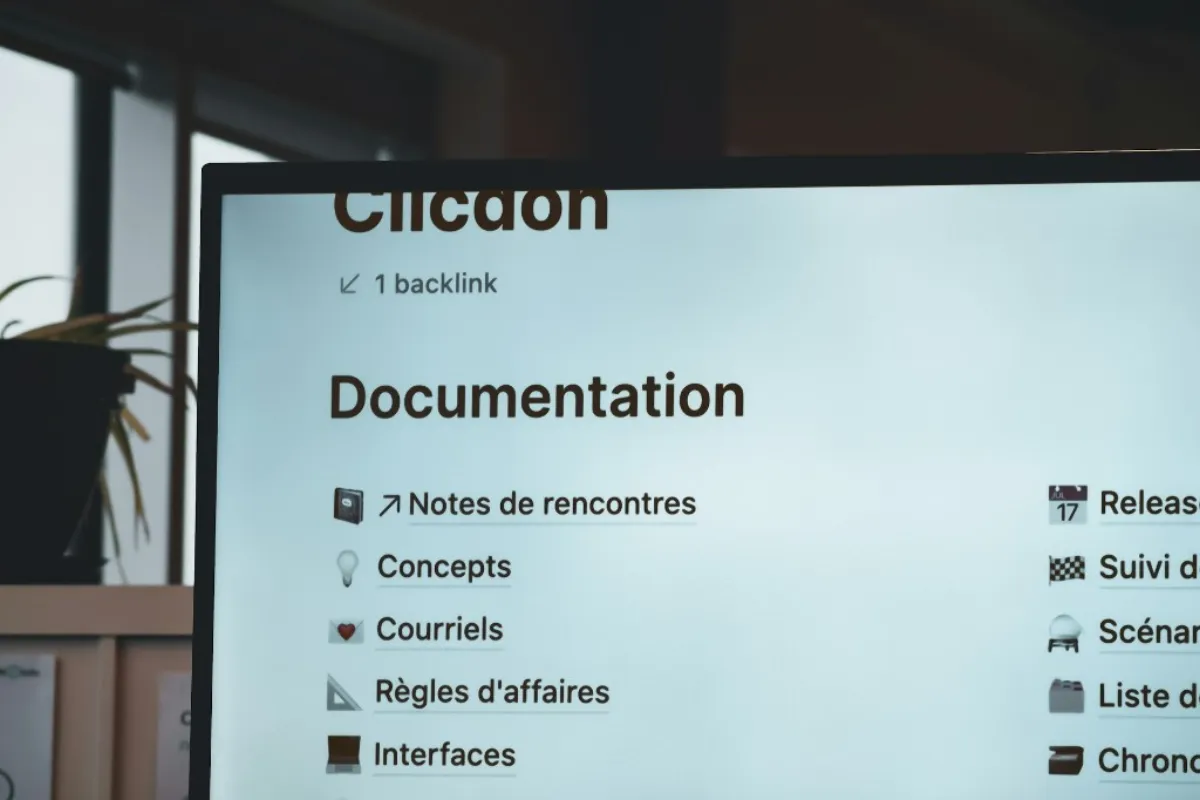
Solid SR&ED documentation is the foundation of an eligible claim. A company may have carried out technically valid work, but without adequate evidence, the claim can be reduced or denied during a review by the Canada Revenue Agency.
The CRA evaluates not only the nature of the work, but also the company’s ability to demonstrate, in a structured manner, the existence of technological uncertainty and an experimental approach. Documentation therefore serves not only to support financial amounts: it must also support the technical reasoning.
A solid claim relies on clear traceability between initial objectives, tests carried out, adjustments made and results obtained.
Why SR&ED Documentation Is Critical
The Scientific Research and Experimental Development program is based on specific criteria defined by the CRA, particularly in its technical guide T4088. The company must demonstrate:
- a systematic approach to experimentation
- a scientific or technological uncertainty
- the existence of a technological advancement
Documentation establishes these elements credibly. Without contemporaneous supporting evidence, the analysis becomes retrospective, which weakens the claimant’s position.
Well-documented claims also facilitate the review process and reduce the risk of additional information requests.
The Importance of Contemporaneous Evidence
Contemporaneous evidence is created at the time the work is performed. It reflects the technical reality of the project at each stage.
| Document Type | Concrete Example | Why It’s Useful |
|---|---|---|
| Technical notes | Dated test journal | Demonstrates uncertainty at the time of work |
| Time sheets | Detailed weekly tracking | Justifies claimed salaries |
| Test results | Comparative reports | Shows the experimental approach |
| Technical emails | Discussion about an obstacle | Credible contemporaneous evidence |
| Subcontracting contracts | Specific technical mandate | Justifies external expenses |
The CRA places particular value on these SR&ED documentation elements, as they demonstrate that the uncertainty genuinely existed at the time of the work and was not formulated after the fact.
Reports written only at the end of a project, even if detailed, are less convincing if they are not supported by continuous documentary evidence.
Structuring Technical Documentation
Effective documentation follows a coherent logic.
It should make it possible to understand:
- The initial technical problem
- Why the solution was not obvious
- The hypotheses formulated
- The tests carried out
- The adjustments made
- The results observed
This progression demonstrates the systematic nature of experimental development. Moreover, well-structured documentation from the start greatly simplifies claim preparation.
If you wish to validate the strength of your current practices, feel free to speak with our team for a preliminary assessment of your situation.
Book a Consultation
Time Tracking and Salary Eligibility
Salaries often constitute the main component of an SR&ED claim.
Time tracking must clearly link:
- the employee
- the activities performed
- the period concerned
- the connection to eligible work
Weekly or biweekly tracking is generally more credible than a global annual estimate.
Time sheets must be consistent with other technical documents. A discrepancy between described activities and declared hours can raise questions during a review.
Justification of Material and Contractual Expenses
In addition to salaries, certain expenses related to consumed materials or subcontracted services may be eligible.
Documentation must demonstrate:
- the direct link between the expense and the experimental work
- the exact nature of the use
- the period of use
Invoices alone are insufficient if they are not linked to technical activities.
Link Between Technical Documentation and Tax Form
The SR&ED claim includes the T661 form. The information entered in this form must correspond to the evidence retained.
Any inconsistency between the submitted technical description and internal SR&ED documentation can trigger requests for clarification.
It is therefore important that the technical description be supported by contemporaneous elements maintained throughout the project.
Integrating Documentation into Existing Processes
A company does not necessarily need a parallel system.
Documentation can be integrated into:
- project management systems
- version control tools
- collaborative platforms
- internal validation processes
The goal is to formalize what already exists, rather than creating an artificial structure solely for the claim.
An integrated approach reduces the administrative burden and improves consistency.
Common SR&ED Documentation Mistakes
Certain practices weaken a claim:
- writing a technical description only at year-end
- using global time estimates without justification
- keeping undated documents
- confusing operational improvement with experimental development
Incomplete documentation does not automatically mean a denial, but it increases the risk level.
SR&ED Documentation and CDAE-IA
The documentation requirements of the CDAE-IA are comparable in terms of rigor, but the analysis criteria differ.
SR&ED emphasizes technological advancement and the resolution of scientific or technological uncertainties.
CDAE-IA focuses more on the development of artificial intelligence solutions and the innovative nature of the project.
When a company claims both programs, it is essential to clearly distinguish the activities associated with each to avoid any confusion.
Document Retention
The CRA may review a claim several years after it is filed.
It is therefore prudent to retain technical documents, time sheets, contracts, invoices and test reports for at least the applicable legal period.
A formalized internal retention policy further strengthens compliance.
Conclusion
Rigorous SR&ED documentation is not a secondary administrative exercise. It forms the basis of the technical and financial credibility of a claim.
By structuring your evidence coherently, maintaining contemporaneous records and ensuring traceability between work and expenses, you significantly reduce risks during a review.
A proactive approach not only secures the current claim, but also creates a sustainable framework for future projects.
To revisit the program’s core eligibility requirements, visit our SR&ED service page.
If you wish to structure or review your internal processes to secure future claims, contact our team for a confidential analysis of your file.
Book a Consultation
FAQ
How long should SR&ED documentation be retained?
The Canada Revenue Agency may review an SR&ED claim several years after it is filed. As a general rule, documents must be retained for at least six years following the end of the relevant tax year. It is prudent to maintain all technical, financial and administrative evidence beyond this period if reviews are ongoing. A clear internal retention policy considerably reduces risks.
Can emails serve as evidence for an SR&ED claim?
Yes, emails can constitute valid contemporaneous evidence if they demonstrate genuine technical reflection, discussions related to a technological uncertainty, or decisions concerning experimental tests. However, they must be dated, specific and consistent with other documents in the file. General or administrative exchanges will have limited evidentiary value during a thorough technical review.
Is an annual estimate of time spent on SR&ED sufficient?
A global estimate made at year-end is generally less credible than periodic documented tracking. The CRA favors contemporaneous records that link declared hours to specific technical activities carried out during the relevant period. Weekly or monthly tracking, supported by activity descriptions, strengthens the consistency of the file and facilitates the justification of claimed salaries.
What if our documentation is incomplete for a previous year?
If contemporaneous documentation is partial, it may be possible to supplement the file with secondary elements such as internal reports, project versions, technical presentations or employee attestations. However, retrospective reconstruction remains less solid than a continuously documented system. It is therefore recommended to quickly implement structured practices for future fiscal years.

Elie Karam
President
Expert in grants and tax credits, Elie Karam has been helping Quebec businesses obtain government funding for over 15 years. His passion for innovation and deep expertise in financial assistance programs make him the ideal advisor to maximize your returns.
View LinkedIn profile